
How Good Is Haynes Geometry?
Thinking of basing my rear suspensions on the Haynes roadster layout and was wondering if anyone had ever run the figures through “proper” suspension
analysis software to see how well it is in theory.
Obviously even built “to book” there are still some variables, wheel size and offset, ride height, tire size etc. but assuming some, relatively,
standard assumptions has anyone ran the figures? If so would they be happy to share their findings for roll centre height, camber gain in roll etc?
Almost more interesting, after running the figures did they still choose to build to-book or did they make any design changes?
I do know there is book error concerning the lengths of the driveshafts - worth looking into before you start cutting steel.
I can't remember if anyone has done the analysis,
Its generally noted that there isn't enough camber gain during hard cornering on the front leading to mid corner understeer on the track.
This is apparantly due to a compromise with the sierra upright which is less than ideal.
The work round is to add some more roll stiffness via arbs or stiffer springs to limit the roll.
Other than that its a pretty sorted design as it had some proper analysis done on it in the design phase.
Always room for improvment though.
Have not heard of any complaints about the rear.
The original book needed a mod to the dirve shafts however this was rectified with wider wishbones so the mod is no longer needed
[Edited on 13/7/11 by mikeb]
as said they are a little prone to under steer on the absolute limit but good suspension setup can keep it under reasonable control. i tend to find mine only playing up on tight hairpins and very tight roundabouts.
Good question. How easy would it be to use the back end design to build a stand alone axle? I'm thinking along the lines of an independent back
end to fit under my Pug 106. Escort style strut towers for the shocks.
(front bike engine, RWD bty)
Steve
Hi
By repositioning the bracketry and some chassis members the geometry can like anything be Modified to be good EVEN using the sierra uprights. (
that's the excuse they all use for not getting the basics right in the first place ) But what the chassis really requires is a lot more
triangulation to stop the huge amount of flexing that takes place in the book design. There's no point improving the geometry if the chassis does
not allow the benefits to actually be under control.
Cheers Matt
quote:
Originally posted by procomp
Hi
By repositioning the bracketry and some chassis members the geometry can like anything be Modified to be good EVEN using the sierra uprights. ( that's the excuse they all use for not getting the basics right in the first place ) But what the chassis really requires is a lot more triangulation to stop the huge amount of flexing that takes place in the book design. There's no point improving the geometry if the chassis does not allow the benefits to actually be under control.
Cheers Matt
One of the posts above mentions a mistake in “the book” around the rear end. Can someone specify what this is? I think I recall something about
wishbone lengths, someone advertising plus 10mm to give correct track, is this what we’re talking about?
Back to the main focus of the post.
I’m not really looking for answers about improving triangulation or other chassis matters because I’m building my own, it’s a midi and so will have no
similarity to the Haynes. Equally I was already set on a path of sorting my own front geometry because I knew the sierra uprights were a major
compromise and also that the chassis pickups are two close to the centreline for my midi because I need to get, two sets of feet, in between the lower
mounting points.
However the rear-end…if the geometry is good, if I can make the front geometry compliment it, if there are no obvious packaging problems etc. The
standard book parts could well help shortcut one end of my build!
So back to my original question and given that most site the front as the problem end, are most people happier with the back?
Has anyone modelled or run the figures to determine what the true figures are?
The mistakes are all listed on the Haynes forum, infact with a bit of searching you may well find them on here within the Haynes section.
Appologies..... i was refering to the Haynes Roadster.
Book version (locost) chassis as its called same applies with a bit of searching.
For those interested I’ve made a similar post on the locost USA forum to see if better answers come from over there. Thanks for the replies so far
(from here) but the real answers remain elusive.
http://www.locostusa.com/forums/viewtopic.php?f=5&t=12551
Things like where I can find amendments to the book plans are welcome but the main thrust of the post was:
Has anyone analysed the Haynes (or IRS adaptation of the locost) suspension design through proper suspension analysis software (or even a string
computer) if so what were the findings? I am particularly interested in the results for the rear suspension but its relationship to the front is
obviously partially of interest
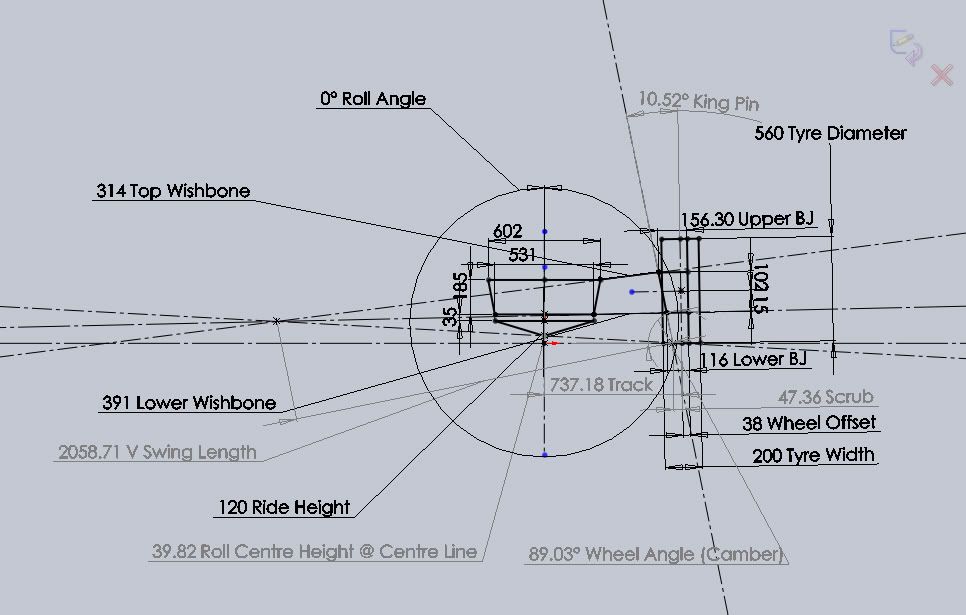
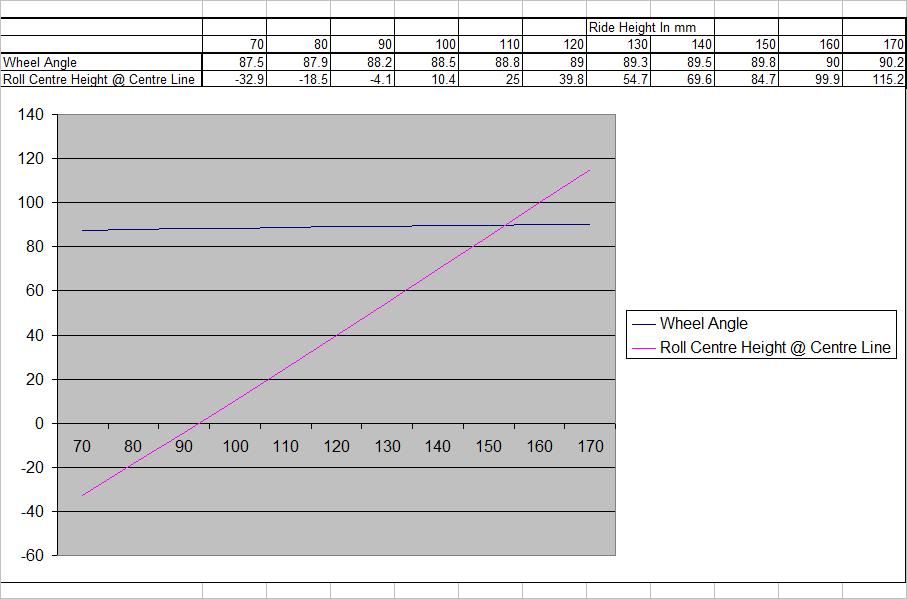
As information seems lacking I decided to model the rear suspension myself and share what I found. Firstly some assumptions, wheel size is approx for
a 15” with 195 by 50 tyre but it will depend what tyre/ rim width you run. Track was originally set at standard Sierra approx 1468mm with the wheel
vertical (zero camber) this increased by about 6mm when I set the model camber to 1 degree negative (book recommended initial set-up). As a ride
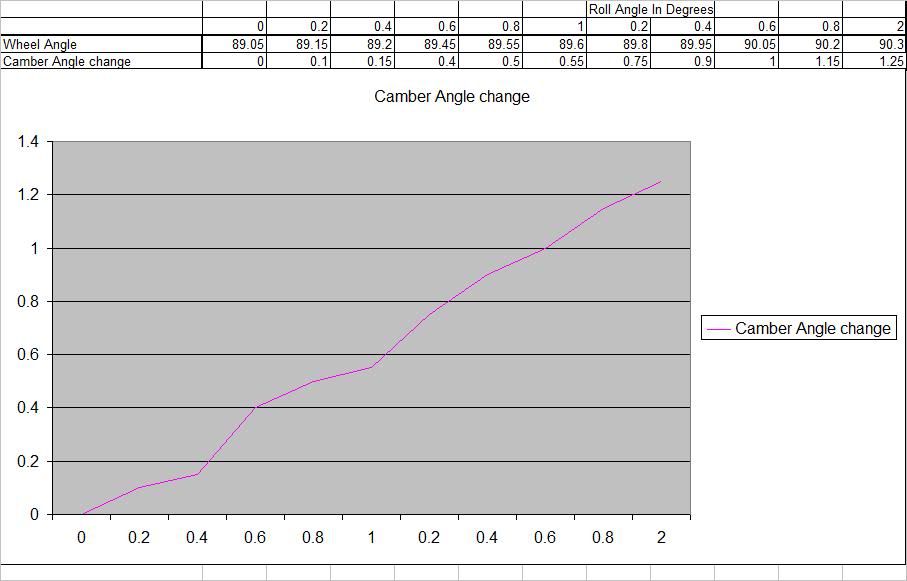
height I started at 120 and went up and down 50mm from there. Below is the picture of the cad model and the findings for straight suspension bump
rebound, I’ll do some roll figures and post these later
Conclusions
Who knows? But I’m welcome to suggestions. On balance everything seems pretty good, the exception might be the roll centre movement, moving way beyond
the amount of bump or rebound. Additionally shorter top wishbones would reduce the amount of camber gain
edite'd as im not sure what I said is right! Lol
[Edited on 17/7/11 by Strontium Dog]