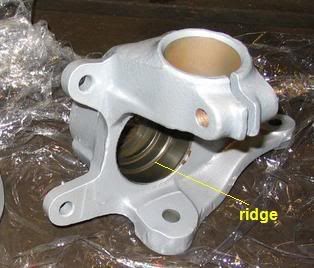
here's a pic of the hub carrier with them removed:
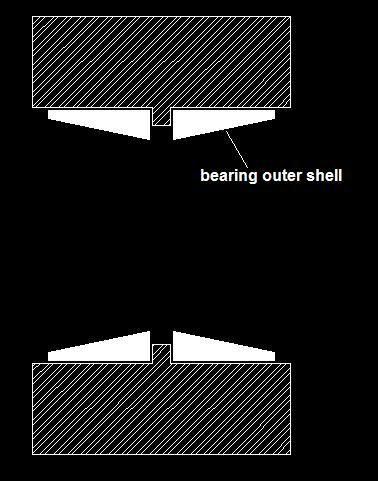
and a quick sketch of the x-section

I've had the Sierra disc braked hubs blasted and I'm now replacing the bearings, the flange, etc come apart easy enough, I'm now left
with part of the roller bearing inside the hubs, how on earth do you get them out, they are very tight
Cheers
David
a press I think
I used a punch and a hammer to drive mine out. Tap alternatly on opposite sides to keep the bearing outer straight.
Push the new ones in with a press.
As Mr Smart51 says Drift and hammer to get the old ones out, but I was able to tap the new ones in using the old bearing as a drift. Just make sure
it's fully home before reassembly.
Cheers
Mark
I wouldnt recomend this as a particularly good way of doing it but.....
I knocked mine out very carefully with a copper drift. On inspection i dont appear to have damaged the hub carrier itself but only time will tell.
Yep, knock them out from the centre with a drift/ punch - it shouldn't be to tight
here's a pic of the hub carrier with them removed:
and a quick sketch of the x-section
Thanks everyone,
I've done other wheelbearings in the past, they have started to move fairly easily, but these seem very tight. I have soaked the carriers in WD40
overnight, it may or may not help but I'll give it another go
Cheers
David
[Edited on 22/2/07 by Minicooper]
quote:
Originally posted by CaLviNx
Hi
........ its not recommended to be done by the ham fisted


if you have acses to a welder a run of weld arround the bearing outer shell surface. ( needs to crank up the amps )
When the welds cool it contracts pulling the shell with it the bearing. turn over quick tap and they drop out.
need to be reasnoble shot beause you dount want to weld it to the carrier.
used this method several times and it works. from a freind who plays with big diggers
regards
Agriv8
WD40 is unlikely to be much help. Application of heat to the housing via a blowtorch should do the job. Main thing if you want to re-use the bearing is to ensure the drift that you use to knock the bearing out is of a softer material than the bearing itself. Same applies to fitting the new ones (or re-fitting old parts) although as Mark suggests, the old bearing outer can be a really useful drift as it will give a nice maximum surface size drift so reducing the possibility of any stress risers which can occur using point contact.