contaminated
|
| posted on 15/4/11 at 01:53 PM |

|
|
Brake disk contamination
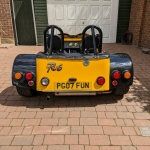
How much difference would oil/brake fluid contamination on disks and pads actually make? I'm having an ongoing nightmare trying to sort my
brakes out. I've bled and bled them but I still end up with a fair bit of pedal travel. The thing is though they will not pump up either. When
you hit the brakes you do get a firm pedal eventually, but the car sort of grinds to a halt rather than stop as it should. I've not bothered
cleaning off the disks or pads yet (and they may well have a bit of muck on them) and a friend has just suggested that a lack of friction could be the
problem. It doesn't explain the pedal travel addmitedly, but it does feel a bit like they are failing to grip.
Any comments?
ta
Dan
Tiger Super Six Independent
www.southernkitcars.com
|
|
|
|
|
02GF74
|
| posted on 15/4/11 at 02:02 PM |
|
|
what brake calipers and master cylinder you got?
where is he bleed nipple on the caliper?
how are you bleeding them - push pedal/open/close nipple/release pedal or eezibleed or some other way?
you have some slack between push rod and m/c piston when pedal is not pressed?
|
|
|
britishtrident
|
| posted on 15/4/11 at 02:33 PM |
|
|
What brake set up are you running ?
Assuming you are 100% sure there are no leaks --- and the pedal box is stiff enough to avoid excessive deflection.
If you have Cortina front callipers suspect a seized piston (or jammed pad) in one of the calipers.
On Sierra derived rear ends callipers are the first suspect as most double wishbone set ups the Sierra calliper sits with the bleed nipple in
the wrong place to get the air out. Unbolt the calliper and bleed with the nipple at the top. It helps to use an Eezileed when bleeding makes
life easy. The other thing is to be 100% sure after bleeding the hand brake is properly adjusted --- slacken the cable right back and pump the pedal
hard several times then re-tension the cable.
If try the above and don't find any improvement and you have fancy alloy multi-pot callipers then that is different can of worms.
You can test the master cylinder and pedal box setup by unscrewing the pipes and replacing them with bleed nipples --- give it a quick bleed after
which the pedal should be rock solid. You can then reconnect and bleed one circuit at a time to identify which circuit is causing excess
travel.
|
|
|
pewe
|
| posted on 15/4/11 at 03:22 PM |
|
|
BT like the m/c test.
Sorry to hi-jack the post but it's relevant.
Does that test apply to servoed m/c's i.e if the servo isn't working and engine off will it still prove the m/c is working or not?
How do you prove the servo's working?
Cheers, Pewe 
VV Ta, Adi.
[Edited on 15/4/11 by pewe]
|
|
|
adithorp
|
| posted on 15/4/11 at 03:29 PM |
|
|
quote:
Originally posted by pewe
BT like the m/c test.
Sorry to hi-jack the post but it's relevant.
Does that test apply to servoed m/c's i.e if the servo isn't working and engine off will it still prove the m/c is working or not?
How do you prove the servo's working?
Cheers, Pewe
Pewe...Check the servo by pumping the brake with engine off to empty the servo vacuum. Then press brake while starting engine and you should feel the
pedal move as the servo builds vacuum.
Contaminated... We realy need to know the setup you have as BT says.
"A witty saying proves nothing" Voltaire
http://jpsc.org.uk/forum/
|
|
|
Hugh_
|
| posted on 15/4/11 at 03:49 PM |
|
|
His setup is: Bias bar setup, running 0.625 (front) and 0.7 (rear). M16 calipers at the front. Golf calipers at the back (very similar to sierra
ones).
The rear ones are mounted inverted, but were removed to bleed with the nipples at the top. We've tried traditional press, open, close, lift;
and eezebleed, and drawing it through from the calipers with a oil extractor thing.
We've bled the front and rear at the same time so that the bias bar doesnt limit the movement of the pedal.
And we're drawing a bit of blank to be honest!
|
|
|
britishtrident
|
| posted on 15/4/11 at 04:07 PM |
|
|
If the pedal feels more springy than spongey (and is slowly getting worse) it is very likely to be a seized piston or jammed pad in the Cortina
fronts.
Take one front pad out at a time then with an assistant watching the calliper with a tyre lever between the piston and disk ready to stop the
piston coming out ) very gently press the pedal part way down to see if each piston is moving freely.
[Edited on 15/4/11 by britishtrident]
|
|
|