
exhaust gas temperature?
omega0684 - 20/2/09 at 02:40 PM
as above really, at roughly what temperature is the gas that exit of the exhaust pipe?
i am thinking of using a thickened piece of plastic pipe to use as part of my exhaust extraction system, it has a temperature on the side that says
67.5 degrees C, so im assuming the internal contents of what is travelling through the pipe cannot exceed this temperature?
[Edited on 20/2/09 by omega0684]
cd.thomson - 20/2/09 at 02:48 PM
much much much hotter than 67.5 degrees.
vht paint boiled off my exhaust on my capri 
"most cars’ exhaust temperature after it passes through the catalytic converter is in the hundreds of degrees, like somewhere between 300F and
500F"
therefore up to 250 degrees?
[Edited on 20/2/09 by cd.thomson]
Mr Whippy - 20/2/09 at 02:59 PM
If it’s a side mounted system you can easily get flames coming out it. At the header its 600-700 degs, in the fraction of a second it travels down the
pipe I’m sure its not lost much of its heat.
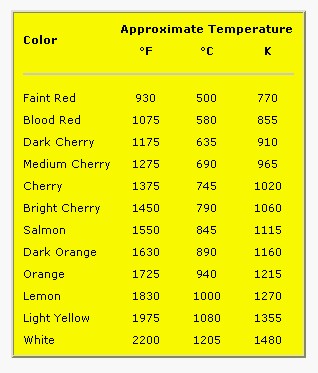
Different for a full system but even then it will be a couple of hundred at full speed. I’ve seen the labels totally burnt off new back boxes with
just normal driving
It might be quite cool at idle but at speed there’s loads of gas flowing through and anything plastic is gone.
my Falcon use to glow like this after a good run, which was probably why my exhaust mountings kept melting  -
-

[Edited on 20/2/09 by Mr Whippy]
JAG - 20/2/09 at 03:19 PM
Petrol engines are about 1000 Celsius, whilst diesels run at 800'ish Celsius.
cd.thomson - 20/2/09 at 03:26 PM
quote:
Originally posted by JAG
Petrol engines are about 1000 Celsius, whilst diesels run at 800'ish Celsius.
Wouldnt a turbodiesel generally run hotter due to the compression?
Mr Whippy - 20/2/09 at 03:37 PM
quote:
Originally posted by JAG
Petrol engines are about 1000 Celsius, whilst diesels run at 800'ish Celsius.
from Wikipedia -
quote:
In diesel engines, a mechanical injector system vaporizes the fuel into a pre-combustion chamber (as opposed to a Venturi jet in a carburetor, or a
Fuel injector in a fuel injection system vaporizing fuel into the intake manifold or intake runners as in a petrol engine). This forced vaporisation
means that less-volatile fuels can be used. More crucially, because only air is inducted into the cylinder in a diesel engine, the compression ratio
can be much higher as there is no risk of pre-ignition provided the injection process is accurately timed. This means that cylinder temperatures
are much higher in a diesel engine than a petrol engine, allowing less-combustible fuels to be used.
wiki linky
locoR1 - 20/2/09 at 03:41 PM
quote:
Originally posted by cd.thomson
quote:
Originally posted by JAG
Petrol engines are about 1000 Celsius, whilst diesels run at 800'ish Celsius.
Wouldnt a turbodiesel generally run hotter due to the compression?
Turbodiesel engines run lower exhaust temps than normally aspirated diesels "at least the ones i test at work do" would assume due to the
turbo taking energy out of the exhaust pulses.
Would guess the same applys to petrol.
cd.thomson - 20/2/09 at 03:53 PM
Turbodiesel engines run lower exhaust temps than normally aspirated diesels "at least the ones i test at work do" would assume due to the
turbo taking energy out of the exhaust pulses.
Would guess the same applys to petrol.
Yes that does make sense 
deezee - 20/2/09 at 04:50 PM
I'm not sure thats true, Just cos some of the speed of the gas is being used to spin a turbine, doesn't make the exhaust gas cooler. Its
not hot because its moving. So slowing it down won't cool it.
The downpipe on my MR2 turbo glows when i'm driving enthusiastically. The reason Diesels run cooler, is because they don't flow as much
air. 2.0L petrol running at 7200 RPM versus 2.0L diesel at 5400 RPM.
snapper - 20/2/09 at 06:51 PM
Back to the point gentlemen
Plastic in the gas flow of an exhaust will be as useful as my last chocolate fireguard