
Face sealing. O ring vs gasket
tegwin - 27/3/15 at 03:19 PM
Be curious what peoples thoughts are on this..
This kind of head-torch uses an O-Ring to seal the lens against the body.... they claim its good for 100m of water!!
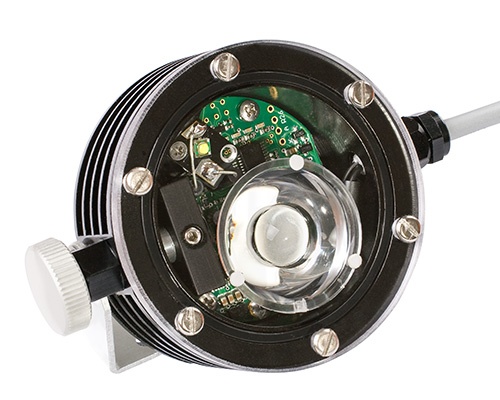
I understand the theory of how O rings distort to give a seal etc..
I am looking at creating a lamp with a slightly more complex shape where machining an O-ring groove wont be as simple.
Could a similar level of seal be achieved by sandwiching a rubber/silicone sheet between the polycarboante lens and the alloy body do you think?
owelly - 27/3/15 at 03:51 PM
I used to skim the cylinder heads off my 125 race bikes and machine a groove for an o-ring to sit in so they hold pressure well, but on later mods to
the heads, instead of machining a groove, I machined a shoulder on the head and a recess in the cylinder. I then chamfered the outer edge of the
shoulder to allow a space for the o-ring. The o-ring was squidged into the corner of the recess by the chamfered edge if that makes any sense. Would
that be an option for your application?
tegwin - 27/3/15 at 03:54 PM
Its an option but the new lamp is oblong with different radii either end meaning I would really need a mill to make that happen.
I only have a lathe so was trying to get out of cutting an O ring groove
coyoteboy - 27/3/15 at 04:10 PM
I've done a fair bit of "trying to make stuff seal" for both vacuum and high pressure. A good closed cell neoprene gasket will work
fairly well but you will have to get the surfaces perfectly flat and evenly pressured to get a good high pressure seal. o-ring sealing is really
highly dependant on groove size anyway (fractions of a mm either way) but if you have a flexi front face like that lamp you might find a gasket is a
bit poo, but so would an oring be. I'll mill your grooves when my CNC is back alive again, for a small fee 
tegwin - 27/3/15 at 04:13 PM
Hmm... interesting thought.
I do have data tables here that are pretty specific about O-ring groove sizes etc hence why I didnt want to try and chew them out by hand ....
coyoteboy - 27/3/15 at 04:59 PM
Yeah you'd be best either neoprene gasketing (lasts well, cheap and easy to cut, seals nicely) or machining, no o-ring will work hand done
Dingz - 28/3/15 at 03:47 PM
unless you can achieve perfectly flat surfaces with no distortion when you clamp them to gether go for an O ring in the correct size groove.