DaveFJ
|
| posted on 24/2/09 at 09:50 AM |

|
|
Bizzare goggles
Got to admire the craftsmanship in these
http://www.smugmug.com/gallery/6278166_YCdn5/1
Dave
"In Support of Help the Heroes" - Always
|
|
|
|
|
Paul TigerB6
|
| posted on 24/2/09 at 09:56 AM |
|
|
"More than a year" to make!!!............... I've heard there are fools out there on the www who can build a car in less time than
that!!!! All fools hey - nothing better to do with their time.......... 
|
|
|
Hellfire
|
| posted on 24/2/09 at 10:00 AM |
|
|
Very well built but WFT?!?!?!?! 
He wants to get out more....
Steve

|
|
|
deezee
|
| posted on 24/2/09 at 10:02 AM |
|
|
Wow only £7,500 for a pair of goggles. I don't honestly think they "improve" your vision, by reducing the amount of light.
He's just associating how a camera works and imagining a human eye works the same. I reckon I can make something similar for £20 with some old
camera lenses and duck tape.
|
|
|
Mr Whippy
|
| posted on 24/2/09 at 10:06 AM |
|
|
considering he's said he made the lenses out of auto-tinting glass, whats the point of the iris shutter?
|
|
|
cd.thomson
|
| posted on 24/2/09 at 10:24 AM |
|
|
for incorrect reasons:
First they look really cool. Second, they actually do improve the sharpness of vision at long distances at their smallest aperture. They do this by
increasing the depth of field by limiting the aperture similar to a camera lens.
Craig
|
|
|
Paul TigerB6
|
| posted on 24/2/09 at 10:28 AM |
|
|
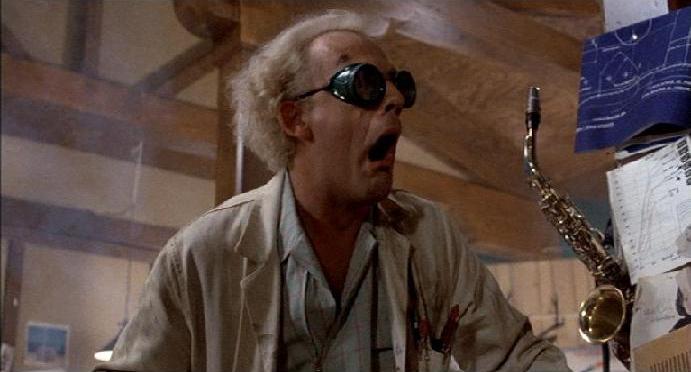
Can only see one person ever wearing them myself....
|
|
|
Wadders
|
| posted on 24/2/09 at 10:29 AM |
|
|
He's missed the boat a bit, i'd rather have a pair of these.
Al.
[img][/img]
|
|
|
DaveFJ
|
| posted on 24/2/09 at 10:30 AM |
|
|
your arguments are somewhat irrellevant!
he did it because he could!
damn nice work... who cares if they actually work!
Dave
"In Support of Help the Heroes" - Always
|
|
|
Paul TigerB6
|
| posted on 24/2/09 at 10:31 AM |
|
|
quote:
Originally posted by DaveFJ
he did it because he could!
damn nice work... who cares if they actually work!
You could say the same about a fair few of the cars on here!!
|
|
|
smart51
|
| posted on 24/2/09 at 10:40 AM |
|
|
You'd have to make sure the irises lined up exactly with your eye spacing.
Thinking about it, you'd only be able to look forwards through them, not turn your eyes to the sides.
Narrow apertures increase depth of field, improving the focus range of the eye if you are short sighted. That's why squinting works.
|
|
|
cd.thomson
|
| posted on 24/2/09 at 10:51 AM |
|
|
Thats not actually true. The eye does not function like a camera and takes a continuous stream of signals from an optical input. Depth of field is
increased in a camera by reducing aperture and slowing shutter speed...a system intrinsically different from how the eye works. Because youre not
increasing "shutter times" the restriction of light only increases the percentage of light falling onto the centre of the visual field..it
doesnt increase the total amount of light being received. - this WOULD result in it being easier to focus on a point of interest, but WOULD NOT
increase depth of field.
Squinting works by using the muscles used in the face to deform the eye slightly to enhance the effect produced by the intraocular muscles (which
provides normal focusing).
[Edited on 24/2/09 by cd.thomson]
Craig
|
|
|
Mr Whippy
|
| posted on 24/2/09 at 10:52 AM |
|
|
quote:
Originally posted by cd.thomson
for incorrect reasons:
First they look really cool. Second, they actually do improve the sharpness of vision at long distances at their smallest aperture. They do this by
increasing the depth of field by limiting the aperture similar to a camera lens.
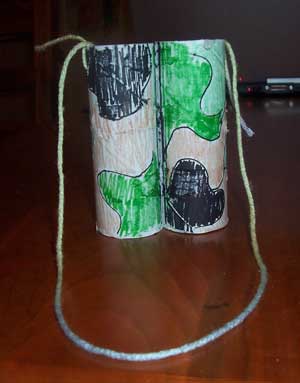
I've found much cheaper DIY versions on the web
|
|
|
Paul TigerB6
|
| posted on 24/2/09 at 10:54 AM |
|
|
quote:
Originally posted by Mr Whippy
I've found much cheaper DIY versions on the web
Tell the truth Mr Whippy - you made them yourself last night didnt you!!!
|
|
|
Mr Whippy
|
| posted on 24/2/09 at 11:32 AM |
|
|
less of your cheek or you'll should see my lollypop dagger
|
|
|
David Jenkins
|
| posted on 24/2/09 at 12:21 PM |
|
|
quote:
Originally posted by Mr Whippy
less of your cheek or you'll should see my lollypop dagger
Is that a euphemism?
|
|
|
Mr Whippy
|
| posted on 24/2/09 at 01:49 PM |
|
|
quote:
Originally posted by David Jenkins
quote:
Originally posted by Mr Whippy
less of your cheek or you'll should see my lollypop dagger
Is that a euphemism?
I don't want to know how your mind works 
|
|
|
smart51
|
| posted on 24/2/09 at 03:17 PM |
|
|
No, I don't agree. Depth of focus is not related to shutter speed. The diameter of the iris is what determines this.
The lens focuses to a point of light on the image so the image is nice and sharp. You get diverging rays of light from the source which strike the
area of the lens. These rays are bent and then converge at a single point on the image. Objects nearer to or further away from the lens are focused
to a point away from the image, that is in front or behind the plane of the image. The result is that the rays of light haven’t yet converged or are
diverging again, causing a blurred puddle of light on the image.
An iris, when closed or partly closed, blocks the outer rays of converging light, reducing the diameter of the puddle of light on the image, improving
its focus. The more the iris is closed, the further away from the centre of focus objects can be without appearing blurred. Theoretically, a pin
hole just 1 “wave of light thick” (if there were such a thing) would give sharp images from any distance. The image would be very faint though. This
is where shutter speeds would come in on a camera.
The human eye has a much wider latitude for light detection and do doesn’t need a shutter to limit the exposure. The eye has an iris of its own which
it can use to reduce the light entering the eye. Between the two, humans can see in a wide range of light intensities.
quote:
Originally posted by cd.thomson
Thats not actually true. The eye does not function like a camera and takes a continuous stream of signals from an optical input. Depth of field is
increased in a camera by reducing aperture and slowing shutter speed...a system intrinsically different from how the eye works. Because youre not
increasing "shutter times" the restriction of light only increases the percentage of light falling onto the centre of the visual field..it
doesnt increase the total amount of light being received. - this WOULD result in it being easier to focus on a point of interest, but WOULD NOT
increase depth of field.
Squinting works by using the muscles used in the face to deform the eye slightly to enhance the effect produced by the intraocular muscles (which
provides normal focusing).
[Edited on 24/2/09 by cd.thomson]
|
|
|
cd.thomson
|
| posted on 24/2/09 at 07:06 PM |
|
|
good point well made Smart51. Ive had a couple of discussions about this before and people have been unable to explain the principles as youve just
done so ive gone with the deformation theory (which does play at least some part).
Thanks for explaining this aperture issue in terms of the human eye. Ill now sit confidently on the other side of the fence!
Craig
|
|
|
Paul TigerB6
|
| posted on 24/2/09 at 07:07 PM |
|
|
quote:
Originally posted by cd.thomson
good point well made Smart51. Ive had a couple of discussions about this before and people have been unable to explain the principles as youve just
done so ive gone with the deformation theory (which does play at least some part).
Thanks for explaining this aperture issue in terms of the human eye. Ill now sit confidently on the other side of the fence!
You will be able to sleep tonight now too - i'm sure!!
|
|
|
David Jenkins
|
| posted on 24/2/09 at 08:20 PM |
|
|
quote:
Originally posted by Mr Whippy
quote:
Originally posted by David Jenkins
quote:
Originally posted by Mr Whippy
less of your cheek or you'll should see my lollypop dagger
Is that a euphemism?
I don't want to know how your mind works
I have a one-track mind - dirt track! 
|
|
|