tegwin
|
| posted on 17/11/12 at 12:06 PM |

|
|
Bore clearence in plastic
Struggling to find a decent source of info on this...
I am designing a compressed air powered motor to be machined entirely out of plastic. The bore is 18mm. If I want a reasonable seal on the piston but
not too much friction what size should I make the piston? Was thinking something like a 0.05mm gap between the piston and the bore?
Any thoughts?
------------------------------------------------------------------------------------------------------------------------
Would the last person who leaves the country please switch off the lights and close the door!
www.verticalhorizonsmedia.tv
|
|
|
|
|
RichardK
|
| posted on 17/11/12 at 12:15 PM |
|
|
Dunno about an answer but could this be controlled easier with a groove in the piston and 'O' rings and trying different sizes?
Just a thought.
Cheers
Rich
Gallery updated 11/01/2011

|
|
|
britishtrident
|
| posted on 17/11/12 at 12:21 PM |
|
|
Small compressed air motors are generally vane type..
[I] “ What use our work, Bennet, if we cannot care for those we love? .”
― From BBC TV/Amazon's Ripper Street.
[/I]
|
|
|
tegwin
|
| posted on 17/11/12 at 12:24 PM |
|
|
Yup, I know that.
Trying to make a scale (ish) radial engine to run on compressed air..
More of an experiment to see how good rapid prototyped parts are.. 
Might just make them exactly the same size and polish the parts until they fit...hmmm
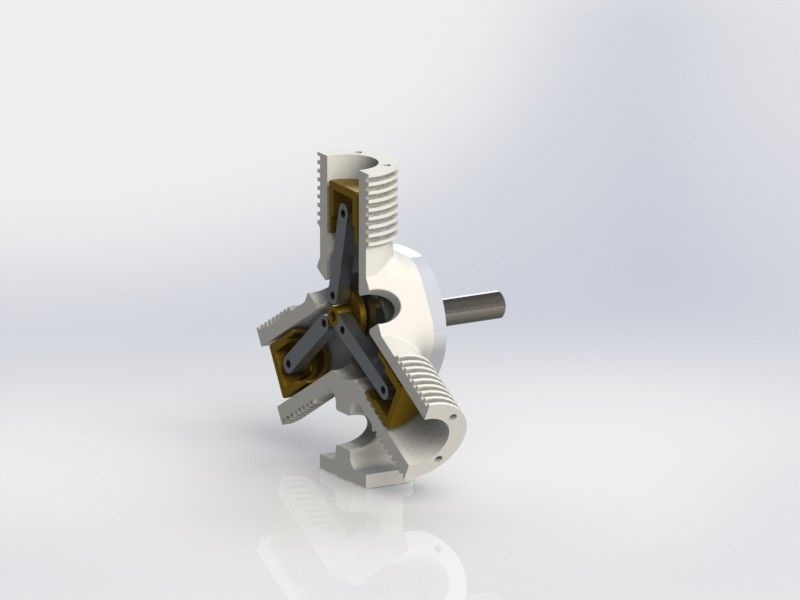
[Edited on 17/11/12 by tegwin]
------------------------------------------------------------------------------------------------------------------------
Would the last person who leaves the country please switch off the lights and close the door!
www.verticalhorizonsmedia.tv
|
|
|
coyoteboy
|
| posted on 17/11/12 at 01:00 PM |
|
|
How fast is it going to turn and any lube? Put a small groove or two in the skirt on load it with oil.
Seems like a reasonable starting point but you may find it a bit tight. What's the manufacturing tolerances on the part?
|
|
|
tegwin
|
| posted on 17/11/12 at 01:04 PM |
|
|
I actually don't know the manufacturing tolerances.... That would be useful to know... I also am not 100% sure of the surface finish either...so
I think making it tighter than it needs to be would make sense...then polish until I get a good fit.
------------------------------------------------------------------------------------------------------------------------
Would the last person who leaves the country please switch off the lights and close the door!
www.verticalhorizonsmedia.tv
|
|
|
Bare
|
| posted on 17/11/12 at 05:27 PM |
|
|
Try and find a used 'Air Hogs' toy. Those had plastic compressed air motors. Use it as a reference/study piece.
|
|
|
britishtrident
|
| posted on 17/11/12 at 08:21 PM |
|
|
The real problem is making valve gear on a reciprocating compressed air motor compact enough.
[I] “ What use our work, Bennet, if we cannot care for those we love? .”
― From BBC TV/Amazon's Ripper Street.
[/I]
|
|
|
tegwin
|
| posted on 17/11/12 at 11:01 PM |
|
|
Ahah, I have come across a very simple rotary sliding valve. Will post some photos of it in a few days. 
------------------------------------------------------------------------------------------------------------------------
Would the last person who leaves the country please switch off the lights and close the door!
www.verticalhorizonsmedia.tv
|
|
|
scudderfish
|
| posted on 18/11/12 at 07:26 AM |
|
|
How about something like this?
http://www.animatedengines.com/co2.html
|
|
|
PSpirine
|
| posted on 18/11/12 at 08:30 AM |
|
|
Don't know how you're planning on rapid prototyping them, but I very much doubt SLS or SLA will give you a smooth enough finish for the
bore (unless you've got access to an F1 team..)
We've got some pretty fancy equipment at work but even that for a a piston bore I fear would cause the whole thing to bind to the point where it
won't run due to the surface roughness. You can always sand it smooth of course 
Make it relatively loose and just feed oil/lubricant to it?
|
|
|
phelpsa
|
| posted on 18/11/12 at 09:40 AM |
|
|
Surfaces tend to grow on most types of RP. The problem being that this can be anywhere from 0-0.1mm depending on shape, location, size etc. seriously
limiting your tolerances.
Your best bet would be making them the same size then machining them to your required tolerance.
|
|
|