Fred W B
|
| posted on 28/9/07 at 01:06 PM |

|
|
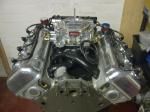
Interesting engine stuff
Remember, written with big V8's in mind, but interesting all the same
Cheers
Fred W B
TOUGH STUFF
One of the toughest things I have found about developing specific combinations to street or race is that some people want to argue about whether they
work or not. Sometimes those people are semi-famous. Sometimes they are not. Generally speaking they have never actually built anything themselves
although they talk like they have. They usually shelled out the gold and hired it done using the general philosophy that if it costs more it must be
better. Forgetting that everything that ever was, was, at one time, developed by somebody. To be honest the high dollar approach works. Given enough
money and enough time success will eventually come. It is possible, however, by using the science that is available, to develop a very successful
specific combination. Sometimes the results are amazing. How do you argue with someone who condems a set-up you actually have running that they have
never built or seen. The answer is you don't. The results speak for themselves and whether they choose to believe them or not has no bearing
whatever on whether the results are true. Everything you see on this site I have actually done. If it is not a finished and tested deal I will tell
you so (as in the 380 project for instance.) Otherwise you can "take it to the bank." Don Dulmage
If you don't have mega bucks to spend then science is the only viable alternative.
The two most important words in the English language are "IF" and "THEN"
"RULE OF THUMB" FORMULAS
These are just some of the formulas we use to get things in the ball park. They are not intended to be perfect. They are, however, very practical for
planning purposes.
Dons Formula for Approximate Horsepower
valve lift divided by 500, times cu inch displacement, equals horsepower
or
valve lift/500 X cu. in.= HP
ie 520/500 X 440 = 457HP
That means that a 440 of reasonable set-up with a valve lift of .520" would in an average set-up make 457 HP. Not too far off of the mark for
planning purposes. Sure it is possible to get more, but this is certainly realistic and useable, not to mention, quick. I use this a lot for street
set-ups and it seems to me to be very practical. It is my own formula.
Dons Law
We use this to quickly calculate required carb sizes. It is approximate but is so close to the actual results of the real formula that I use it almost
exclusively. It is my own formula as well.
To find what size carb an engine will require at 7000 RPM double the cubic inches
or
cu in X 2 = CFM @ 7000 RPM
ie 350 X 2= 700 CFM
Since carb sizes come in 50 or 100 cfm steps it is a workable and quick formula. More detail and a comparison with the real formula is covered in the
book(Old Reliable)
Feel free to use and quote the above formulas but remember they are mine.
Tuned length of an intake runner.
Runner length is not an exact science because of the variables involved but a rule of thumb formula I often find handy for sorting out manifolds is
from Philip H Smith (Tuning For Speed) It states that:
the intake runner should be approximately equal to 90 divided by the RPM in thousands
or
90/rpm in thousands = length in inches
ie for 6000RPM 90/6 = 15 inches
ie for 7000RPM 90/7 = 12.85 inches.
The measurment is taken from the intake valve to the plenum area. If your current 440 Mopar manifold seems too short now for your RPM range
you're beginning to get the picture.
Gearing and Tire Size vrs RPM and MPH
MPH= Rpm divided by gear ratio = Axle RPM
Tire height in inches X 3.14 = distance traveled each tire revolution in inches(circumference)
To convert that to feet divide by 12 (1 foot = 12 inches)
Axle RPM X the Tire circumference in feet = feet travelled per minute
Feet travelled per minute X 60 = feet travelled per hour
Feet travelled per hour divided by 5280 = MPH (1 mile = 5280 feet)
ie 6000 RPM with 4.10 gears on a 26 in tall tire is
6000/4.10=1463.4 Axle RPM
26 X 3.14=81.64 inches tire circumference
81.64/12=6.803 feet tire circumference
1463.4 X 6.803= 9955.5 Feet per minute
9955.5 fpm X 60 = 597330 Feet per hour
597330/5280 = 113 MPH
This is the most basic way to figure it out. I used it in trade school when teaching because it helps understand exactly what we are figuring out and
why. Besides it works well. To find yours substitue your figures for RPM, Gear ratio and Tire Height.
Head Flow Requirments (Smokeys)
To find what the actual requirements for head flow in an engine are Smokey Yunicks formula for 8000 RPM . If I only want to turn 6000 rpm then I
multiply the results of his formula by 6000/8000 to get the required number. This allows me to alway use the same factors in the formula and avoid
mistakes. If your a wiz at math this may seem simplistic to you . So be it, it works!
the formula uses the volume of one cylinder in cubic inches times 5.5 to arrive at the required air flow for 8000 RPM
For instance
A 340 would need 340/8 = 42.5 X 5.5 = 233 CFM at 8000 rpm
At 7000 rpm it would need 7000/8000 X 233 = 204 CFM
A 440 would need 440/8 = 55 X 5.5 = 302 CFM at 8000 RPM
since 8000 is too high for any 440 I could afford lets try 6500 RPM
6500/8000 X 302 = 245 CFM which is right about where a good 452 head would flow with stock valves.
These figures may seem slightly low but they certainly give us at least a place to start when calculating air flow. They are probably with in 10% or
less though and very attainable. I use them as a guideline regularily and find them handy.
Engine Displacement
How many cubic inches is it now?
To find out multiply the bore times the bore times .7854 times the stroke times the number of cylinders. Why .7854? Because a circle is 78.54% of a
square of the same dimensions in area. 78.54% expressed as a decimal is .7854.
We use this instead of pi because we found that it completely eliminates the confusion between the area and volume formulas and the circumference
formula. It is also very easy to remember as the 7854 are in the left corner of your calculator pad.(across two
and down then back two).
If the bore is 4.1" and the stroke is 4" with 8 cylinders then the displacement is
4.1" X 4.1" X .7854 X 4" X 8 = 422.48 cu in
Sometimes it works better for some of us to do it in steps like
4.1 X 4.1= 16.81
16.81 X .7854 = 13.02574 (It would be OK to use 13.02)
13.02574 X 4 = 52.810296 (or 52.81)
52.810296 X 8 = 422.48236 or 422.48 cu in
Dons Rule for 8 cylinders on a 4 inch Bore
A 4 inch bore is a special case and allows for a terrific shortcut I discovered by accident many years ago. It is "Stroke times 100 plus 2 = Cu
Inches"
ie for a 350 Chev stroke is 3.48 and bore is 4 inches
3.48 X 100 = 348
348 + 2 = 350 cu in
or
3.48 X 100 + 2 = 350 cu in
This is my own formula as well.
HEAD FLOW VRS HORSEPOWER
There is a relationship between head flow and horsepower. We use the rule of thumb of 2.2 cfm per horsepower. It gives us a reference point at the
very least and seems to be a fairly practical formula for commonly available setups.
MAX HP per CU IN
It is generally accepted that the max hp per cubic inch on gasoline in an unblown engine is about 2.2 hp per cu in.
PISTON SPEED in FEET PER MINUTE
What is a safe engine speed ? How much rpm is too much? When does it become damaging to the engine?
Generally speaking anything under 3000 feet per minute piston speed (or more correctly piston travel) will not harm an engine. In a high performance
application 3500 FPM can be used since the burst at that speed will be short in duration. For racing most engines are outside of this envelope and are
hurting themselves from the minute the RPM climbs above safe piston speed. Good parts changed regularily is the only solution to that problem. This
piece is about how to plan to keep the engine below where it is hurting itself.
IE If a 440 with a 3.75" stroke is turning 4000RPM the piston speed is--
Stroke X 2 X 4000 divided by 12 = FPM
or
3.75" X 2 X 4000/12 = 2500 feet per minute which is very safe however if it turned 8000 RPM that would be---
3.75 X 2 X 8000/12 = 5000 feet per minute which would require "the broom" if anything but mega buck parts were used.
This can give you a pretty good idea of what a reasonably safe engine speed is and what it is not.
Horsepower
The condensed formula for horsepower is Torque X RPM/5252 =HP
Because of the 5252 factor used to divide torque and rpm then torque and horsepower are always the same at 5252RPM. I always check Dyno charts to
see if this is so. If they aren't the Dyno charts are fakes and yes I have found a couple of them.
Torque is the amount of twist
Rpm is the number of twists
Horsepower is the combo of both of them
Bigger torque is a stronger twist
Bigger Horsepower is a larger of number of twists but not nessecarily bigger twists
If you have sufficient number of twists per minute you can raise HP even though torque is beginning to fall. (to a point but eventually torque falls
off so bad that HP does as well)
Max torque occurrs at max volumetric efficiency (or where the engine's breathing is the most perfect)
Rod Lenth to Stroke Ratio
There is a ratio often cited relating to rod length ratio. Rod length ratio is found by dividing the centre to centre length of the rod by the stroke.
For Instance: If the centre to centre length was 6" and the stroke was 3" then the ratio would be 6/3=2to1 or just 2.
Ratios of around 1.85 are thought to be ideal. The longer the rod is, the less the rod is moving the piston by draging it from the side and the more
piston movement is related to the crankshaft. A long rod motor tends to move the piston up to and away from TDC at a measurably slower rate and
therefore requires slightly less peak flow in the cylinder head and will have a slightly broader torque range. There is much debate over the effects
of this and how actually important it is. It appears the effects of a long rod are significant but not the, be all/end all, of the whole deal. If this
is difficult to comprehend make yourself a cardboard model and watch how much the piston moves away from TDC for each degree of crankshaft rotation
with both a long rod and a short rod. There is no debate though that a long rod motor is easier on the cylinder wall and piston.
STROKERS, PROS AND CONS
What are the advantages of a longer stroke?
Are they real or just hype?
These questions are often asked but the answers are not always as straight forward as we might like.
It is generally thought that the ideal bore stroke ratio is 90%. That means that the stroke should be 90% of the bore. This combination gives a
reasonable amount of piston travel per degrees of rotation without being excessive. It also allows the bore to be large enough to carry valves of
sufficient size to properly feed the engine. A Hemi, because of its inclined valves, can cheat this a bit but in a wedge it is a severe limitation. If
the 90% rule is followed then all should be well. To properly understand this, one should ask, "Are there any disandvantages to a short
stroke?"(Looking at the opposite problem will often clarify a point) The answer is yes. A short stoke motor requires a high dome to obtain a
high compression ratio which comes with its own set of problems. Sometime the dome is so high that flame travel in the cylinder suffers. The piston
does not move away from TDC as far (travels a shorter distance per degrees of rotation) so it may be plagued with valve to piston clearance problems
that will be difficult (but surmountable) at best. It will have to operate at higher RPM to obtain the same HP because it will be smaller in cubic
inches than say the 90% motor. RPM is expensive. Valves ,valve springs, cams, retainers , pushrods etc etc must be of the very best (read expensive)
quality to survive this. If the engine is only making the same HP as the larger one can at a lower RPM, then all one has accomplished is to build a
difficult ,expensive, high maintainence "gernade". However, the same problem exists at the other end of the scale. If the stroke is too
long then the cylinder heads cannot keep up with the sheer volume of air being pumped . Often a stroker will produce the same power but at a lower
RPM. Is this because of the torque characteristics of the long stroke, as some would suggest, or is it because the cylinder heads have reached their
peak at a lower RPM than would have happened on a stock stroke engine? In many cases the latter is true. Also in a long stroke engine the rods are
stressed as piston speed in feet per minute increases to the danger point. Even a high dollar engine with the very best parts will require constant
replacement if pushed to those limits. The best reason to built a stroker is because you want one. What are the guidelines? Like we said at the
start. Stroke should be 90% of the bore and no more. This is not the total sum of the story, by any means, but these are some of the things worth
thinking about before you part with your gold.
If you like this page and would like some more of this let me know at "big-d@sympatico.ca" Performance Parts
BIG-D
[Edited on 28/9/07 by Fred W B]
You can do it quickly. You can do it cheap. You can do it right. – Pick any two.
|
|
|
|
|
speedyxjs
|
| posted on 28/9/07 at 01:20 PM |
|
|
And the winner for the longest post is...
How long can i resist the temptation to drop a V8 in?
|
|
|
stevec
|
| posted on 28/9/07 at 01:40 PM |
|
|
I lost the will to live after the first 5 lines
I will have to win the lottery and do it the pay someone else way
Steve.
|
|
|
Fred W B
|
| posted on 28/9/07 at 01:43 PM |
|
|
You don't have to read it you don't want to, you know....
Cheers
Fred W B
You can do it quickly. You can do it cheap. You can do it right. – Pick any two.
|
|
|
speedyxjs
|
| posted on 28/9/07 at 01:56 PM |
|
|
quote:
Originally posted by Fred W B
You don't have to read it you don't want to, you know....
Thank you 
I will read it later 
How long can i resist the temptation to drop a V8 in?
|
|
|
RazMan
|
| posted on 28/9/07 at 02:15 PM |
|
|
I read it - some interesting stuff in there
I particularly liked the 'spot the fake dyno' tip
[Edited on 28-9-07 by RazMan]
Cheers,
Raz
When thinking outside the box doesn't work any more, it's time to build a new box
|
|
|
thomas4age
|
| posted on 28/9/07 at 03:56 PM |
|
|
just yank two superchargers on any engine and be done with it,
expet dons formulea don't wotk on blown engiens very well,
smokey had something going for him, an build the most interesting stuff,
good post little long though,
grtz Thomas
If Lucas made guns, Wars wouldn't start either.
|
|
|
Ivan
|
| posted on 28/9/07 at 04:43 PM |
|
|
I love this kind of stuff - when I built my 350 Chevy motor for my Cobra I used the Performance Trends engine dyno program to spec my parts and
although I ended up with a very mild seeming motor on the strip I ended up beating most of the other Cobra's with much more powerful motors in
theory.
Just goes to show that the right combo of parts is what it's all about.
At the time the program showed that I needed much more exhaust lift and duration but suitable cams where not readily avilable so I settled for less.
Now I note that most modern cams give more duration on exhaust.
|
|
|